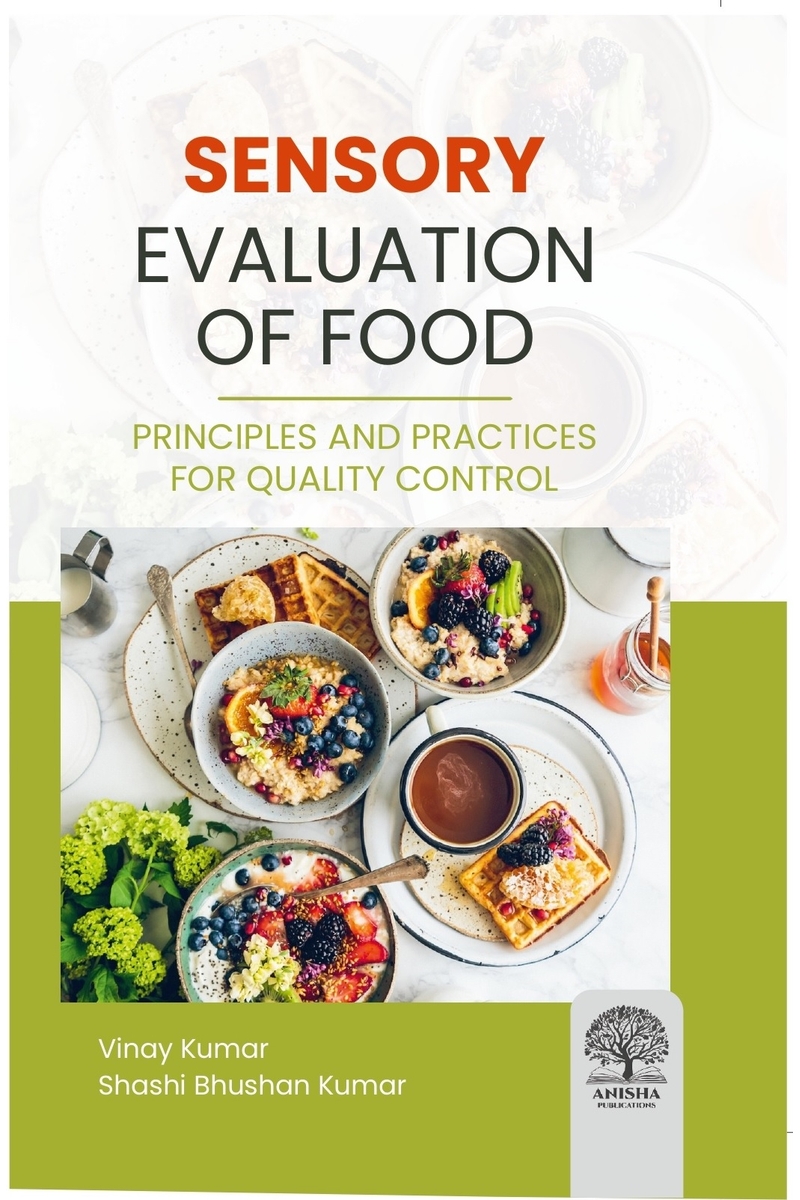
Sensory Evaluation of Food: Principles and Practices for Quality Control
Author: Vinay Kumar & S.B. Kumar
Sensory Evaluation of Food: Principles and Practices for Quality Control is a comprehensive guide that explains how human senses—taste, smell, sight, touch, and hearing—are used to assess food quality. The book covers the principles of sensory science, including the design of experiments, selection and training of panelists, and statistical analysis of sensory data. It also explains the application of sensory evaluation in product development, quality assurance, and consumer preference testing.
By integrating scientific methods with practical guidelines, it provides insights into how sensory perception influences food acceptance and market success. The text explores both analytical tests and affective tests emphasizing their role in quality control and product improvement. It also discusses environmental and psychological factors that affect sensory perception and strategies to minimize bias. This makes it a valuable resource for ensuring consistency, safety, and consumer satisfaction in the food industry.
The book is aimed at food scientists, quality control specialists, product developers, and researchers in food technology. It is also highly beneficial for students of food science, nutrition, and hospitality management, providing a clear understanding of how sensory evaluation plays a vital role in maintaining and enhancing food quality.