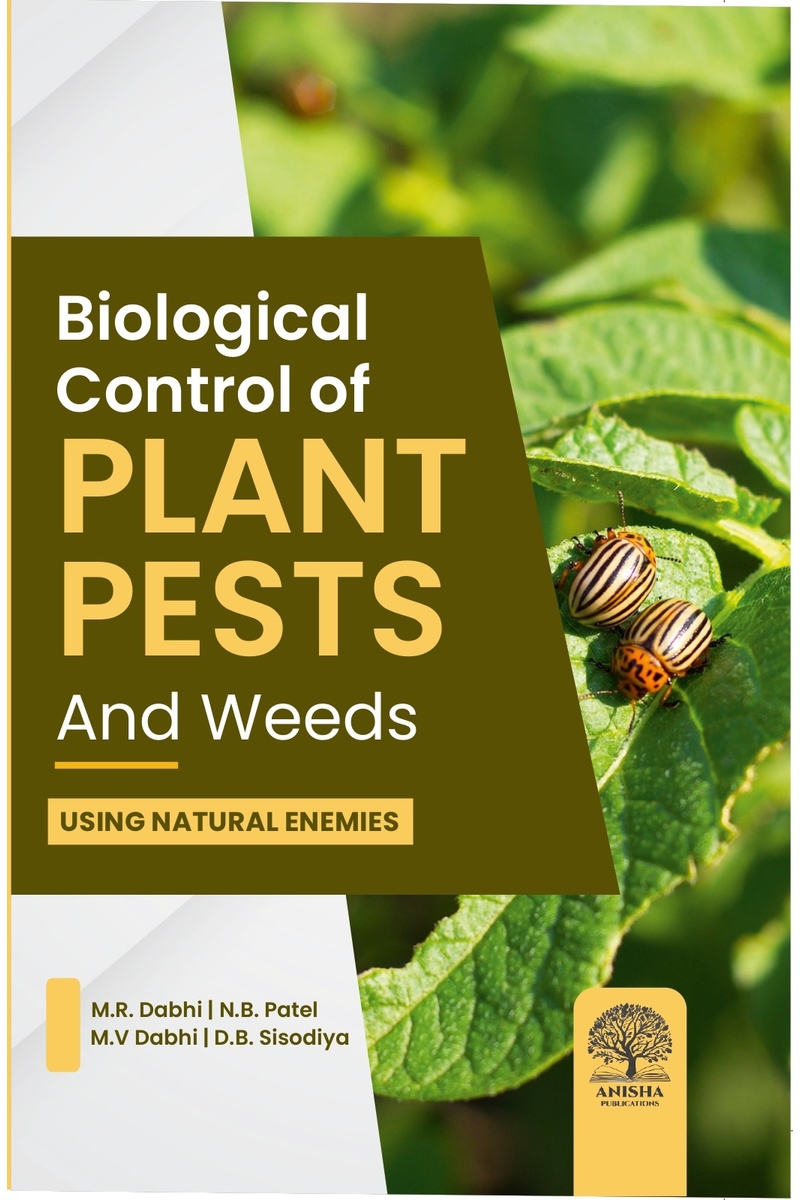
Biological Control of Plant Pests and Weeds: Using Natural Enemies
Author: Dabhi M.R., Patel N.B., Dabhi M.V. & Sisodiya D.B.
Biological Control of Plant Pests and Weeds: Using Natural Enemies presents a thorough exploration of how predators, parasitoids, pathogens, and competing organisms can be harnessed to manage pests and invasive weeds in both agricultural and natural environments. The book clearly outlines the ecological foundations of biological control—covering population dynamics, food-web interactions, and habitat management—and demonstrates how these concepts underpin sustainable pest and weed suppression. By emphasizing ecological balance, it highlights how biological control can significantly reduce dependence on chemical pesticides.
One of the book's major strengths is its effective blend of scientific principles with real-world case studies from successful biological control initiatives around the globe. It examines classical, augmentative, and conservation approaches, showing how each strategy can be applied safely and efficiently. The authors also discuss critical issues such as risk assessment, potential effects on non-target species, regulatory requirements, and the importance of biodiversity in maintaining healthy natural-enemy populations. This book serves as a valuable resource for students, researchers, extension workers, environmental specialists, and farmers who are committed to sustainable crop protection.
Its clear explanations, practical insights, and evidence-based recommendations make it useful for both academic learning and on-the-ground decision-making. For anyone seeking environmentally sound alternatives to chemical pest and weed control, the text offers a trusted and comprehensive guide to utilizing natural enemies for long-term agricultural sustainability.