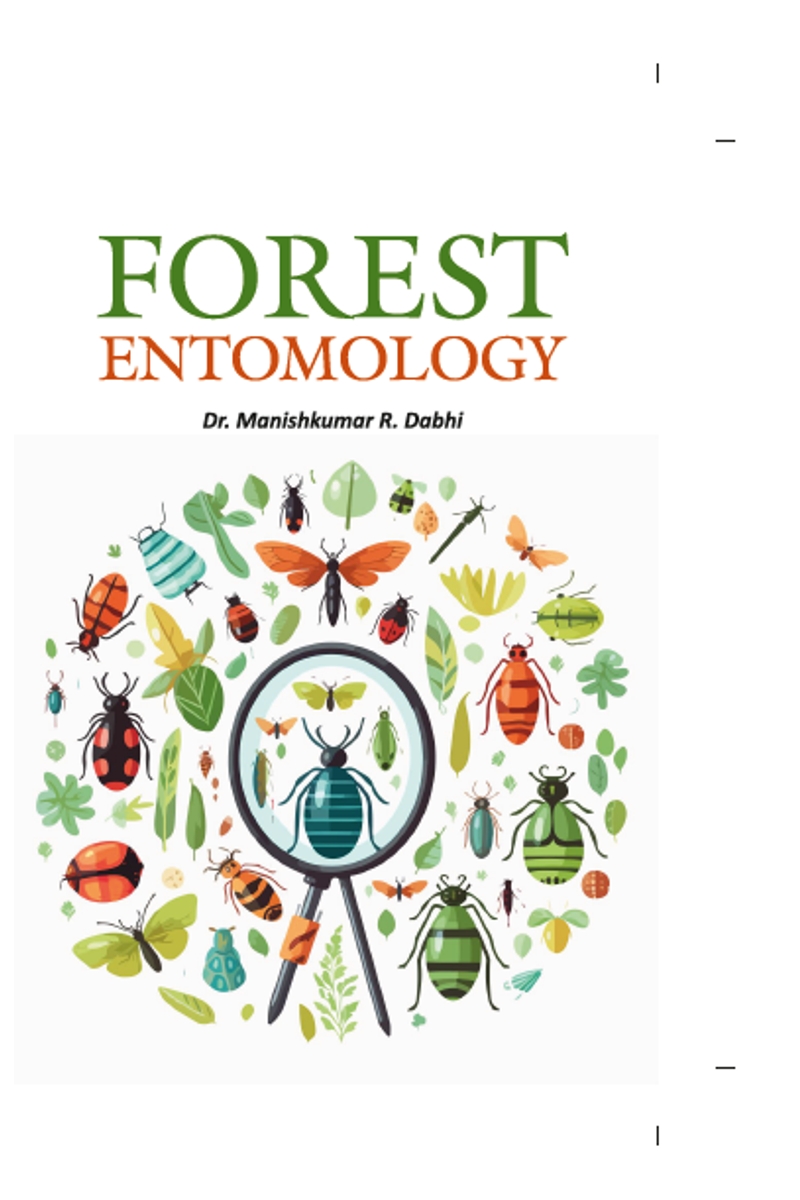
Forest Entomology
Author: Dabhi, M.R.
Forest Entomology offers a comprehensive and scientifically rich exploration of the role of insects within forest ecosystems, with particular emphasis on their impact on forest health, productivity, and sustainability. The book is designed to provide a detailed understanding of the diversity, biology, and ecological significance of forest insects, while also addressing the challenges posed by insect pests to forest resources. Forests are complex and dynamic systems where insects play both beneficial and destructive roles, contributing to processes such as decomposition, nutrient cycling, and pollination, while also acting as agents of damage when populations become unbalanced. This text presents a balanced perspective by integrating ecological theory with practical forest management strategies. The book begins by introducing the fundamental principles of entomology as they apply to forest environments, including insect classification, morphology, and life cycles. It explains how different groups of insects interact with forest vegetation, highlighting the relationships between insects and host plants. Through a systematic approach, the text explores the behavior, feeding habits, and population dynamics of forest insects, providing insights into how environmental factors such as climate, forest composition, and human activities influence insect populations. By establishing these foundational concepts, the book enables readers to understand the complexity of insect forest interactions. A significant focus of the book is on forest insect pests and the damage they cause to trees and forest ecosystems. It discusses various categories of pests, including defoliators, borers, sap feeders, and root feeders, explaining their modes of attack and the symptoms of infestation. The economic and ecological consequences of pest outbreaks are examined in detail, emphasizing their impact on timber production, biodiversity, and ecosystem stability. The text also highlights the importance of early detection and monitoring in preventing large-scale damage. In addition to pest identification, the book provides an in-depth analysis of forest pest management strategies. It explores integrated pest ‘management approaches that combine biological, cultural, mechanical, and chemical methods to control insect populations in an environmentally sustainable manner. The role of natural enemies such as predators, parasitoids, and pathogens is discussed, along with the use of biological control agents. The book emphasizes the need for maintaining ecological balance and minimizing the negative effects of control measures on non-target organisms and the environment. Forest Entomology serves as an essential resource for students, researchers, forest managers, and environmental professionals. By combining theoretical knowledge with practical insights, it offers a comprehensive guide to understanding and managing insect populations in forest ecosystems, contributing to the long-term health and sustainability of forest resources.