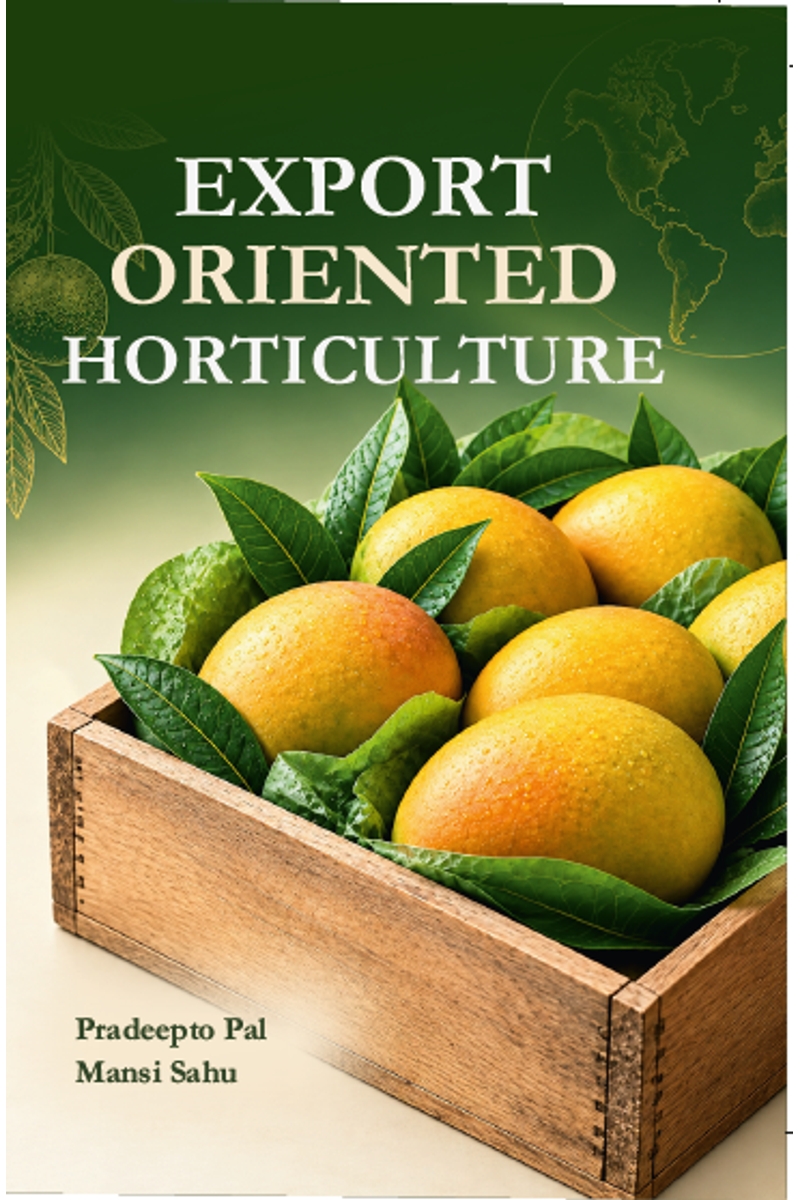
Export Oriented Horticulture
Author: Pal P.
Export Oriented Horticulture offers a comprehensive exploration of the strategies, practices, and systems required to align horticultural production with the demands of international markets. In an increasingly globalized agricultural economy, horticulture has emerged as a high-value sector capable of generating substantial income, employment, and foreign exchange earnings. This book provides a detailed understanding of how fruits, vegetables, flowers, and other horticultural commodities can be cultivated, processed, and marketed to meet global quality standards and consumer preferences. By bridging the gap between production and export, the text highlights the importance of integrating scientific cultivation practices with market intelligence and trade regulations. The book begins by establishing a strong foundation in horticultural science, emphasizing the selection of suitable crops and varieties based on agro-climatic conditions and international demand. It explains how factors such as soil health, irrigation, nutrient management, and pest control influence both yield and quality, which are critical for export competitiveness. Through a systematic approach, the text explores advanced production techniques, including protected cultivation, precision farming, and the use of improved planting materials, all of which contribute to consistent and high-quality output. It also addresses the importance of standardization and grading, ensuring that produce meets the strict specifications required in global markets. Export Oriented Horticulture serves as an essential resource for students, researchers, policymakers, and entrepreneurs interested in the global horticulture industry. By combining scientific knowledge, practical applications, and economic insights, it provides a holistic understanding of how horticulture can be transformed into a dynamic and export-driven sector. The book encourages the adoption of quality-focused, sustainable, and market-oriented practices that can strengthen competitiveness and contribute to long-term agricultural development.